Research
APRL's research vision and current directions.
Our Current Research Vision
Read the APRL research framework in sequence
Each document develops the previous one, from research qualities to a complete research philosophy.
01 · Research Vision
Persistent, Intent-Grounded, and Resilient Embodied Intelligence
We seek to build robot intelligence that preserves actionable understanding across change,
grounds behavior in human intent, and remains effective under uncertainty while recovering from
failure—so robots can deliver reliable physical outcomes with minimal human intervention.
Persistentacross time and change
Intent-Groundedin what people actually need
Resilientunder uncertainty, disruption, and failure
Read the related essay →
→
02 · Research Statement
Situated Spatial Intelligence
Frames spatial intelligence as a lifecycle that connects world modeling, grounded perception,
memory, communication, and execution.
GSI · RGPconstruct and ground spatial understanding
ASM · CSIremember experience and align human intent
ESI → SSIexecute, verify, and revise in a closed loop
Read the recent Research Statement →
→
03 · Foundational Text
APRL Research Philosophy
Explains how experience becomes reliable action—and how action becomes better understanding.
Experienceconstruct and retain spatial understanding
Intent & Actionselect relevant experience and pursue human goals
Outcome & Revisionverify results and improve future understanding
Read APRL Research Philosophy →
Our Current Research Interests
1
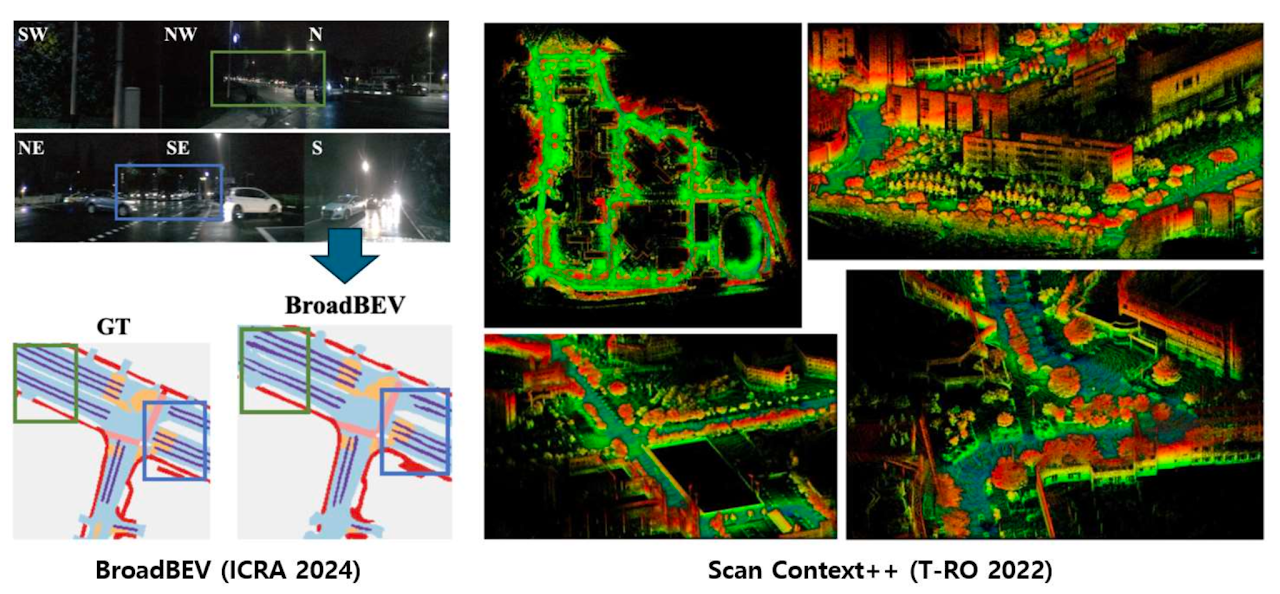
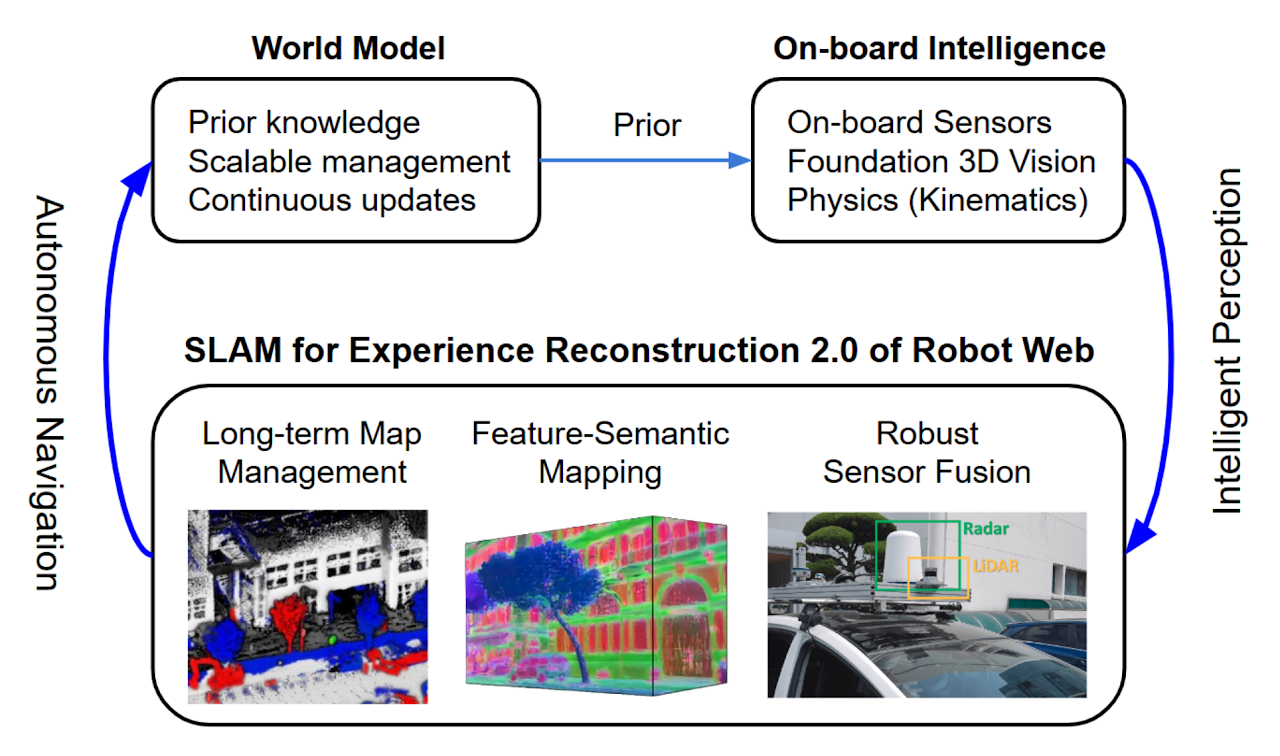
Spatial Intelligence for Autonomous Robot Navigation
- SLAM 2.0 for Robot Web era
- Neural map representations
- Human-robot interactive visual-language navigation
2
Embodied Reasoning and Robot World Models
- Reasoning capabilities for robots
- Generative AI for mobile robot navigation
- World models in AI
?
Guiding research questions
Through these directions, we aim to answer questions such as:
-
How can robots share and leverage the spatial experience accumulated during long-term operation in a task-relevant way?
-
How should VLN be harnessed to improve runtime intelligence, safety, and efficiency?
Our target conferences
Recent Researches
Research plan
Research plan for 2026-2030, including spatial intelligence and autonomous navigation directions.
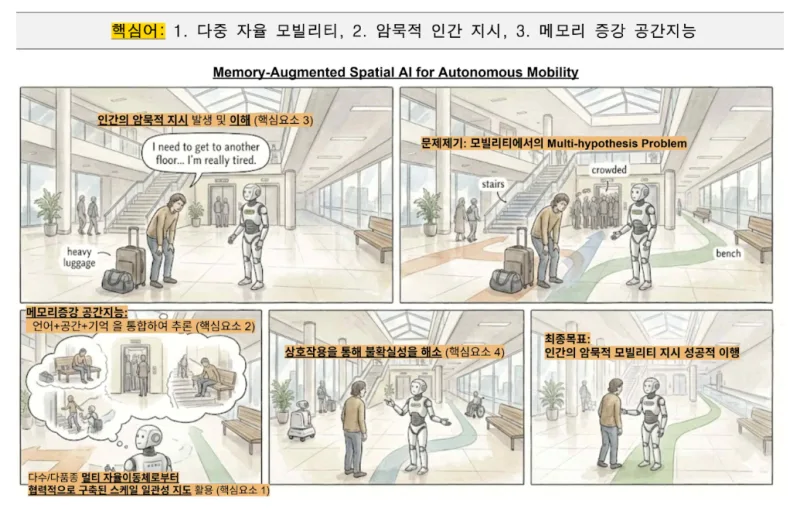
Position slide
Project overview for multi-robot autonomy, implicit interaction, and memory-augmented spatial intelligence.
Invited talk (Current Research Topics)
Date: 2026.07.23 · Event/Session: KAIST Field AI and Robotics Laboratory (FAIR Lab) Invited Talk
Our Methodological Expertise
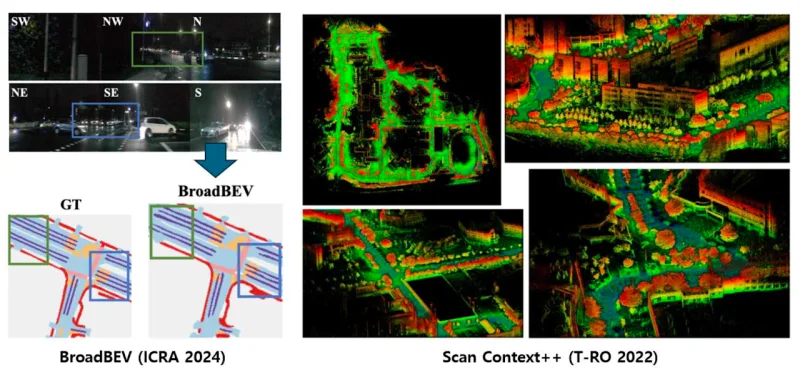
Sensor Fusion and Large-scale Navigation
Mission: map the world with low-cost sensors.
- Enhancing robustness of SLAM and democratizing SLAM cost
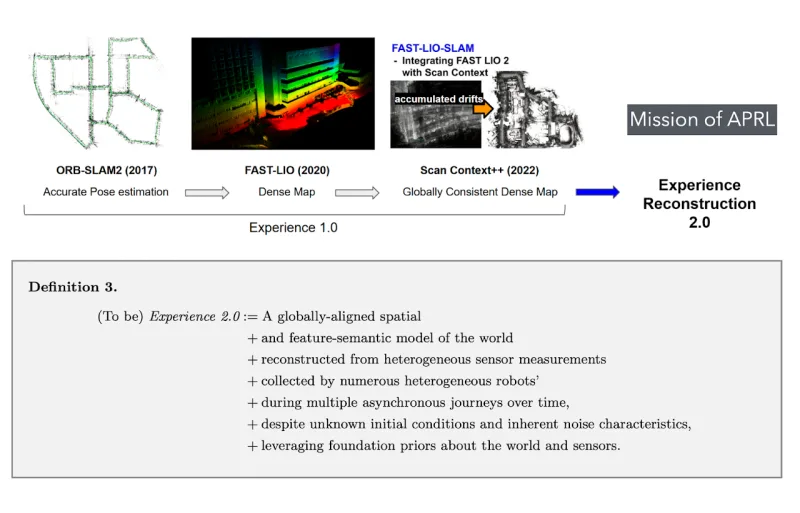
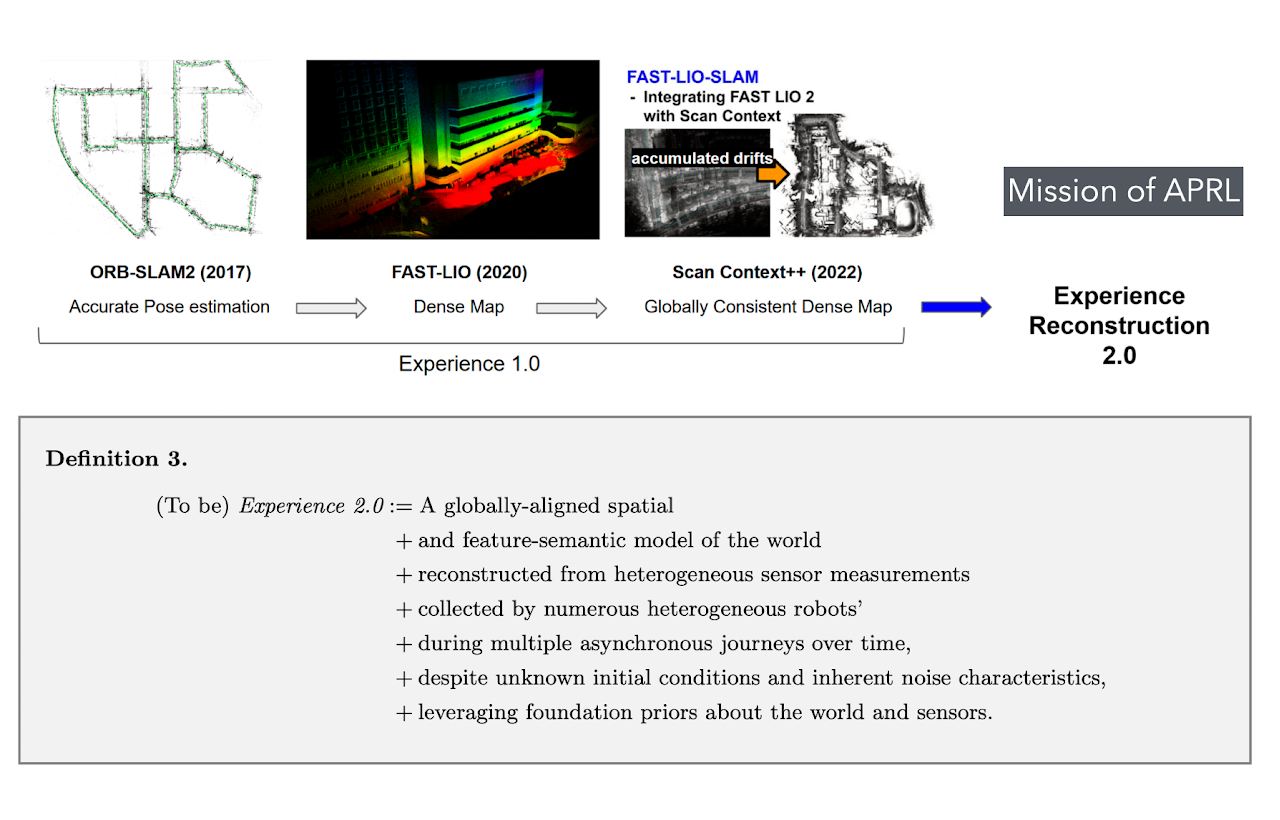
Towards SLAM 2.0
Mission: Be a SLAM 2.0 problem owner and leader.
- Defining and addressing next-generation SLAM challenges in a pioneering way
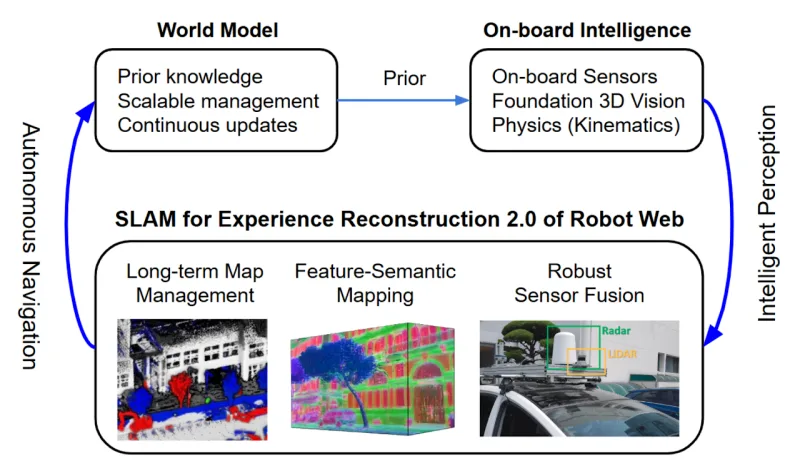
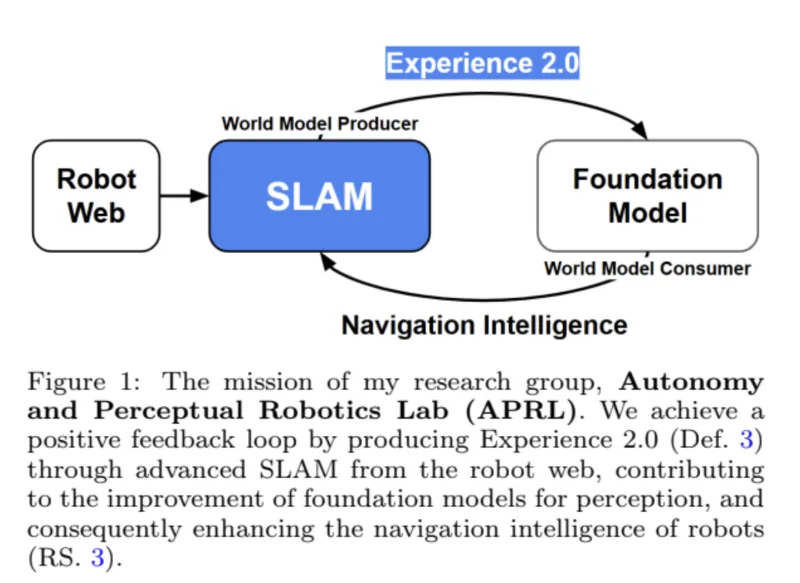
Robot Mapping Meets Foundation World Models
Mission: SLAM helps foundation models, and vice versa.
- Constructing a positive feedback cycle between SLAM as a world data producer and large world models as world data consumers